

How to Read Jewelry Markings: Identify Real Gold, Silver & Platinum
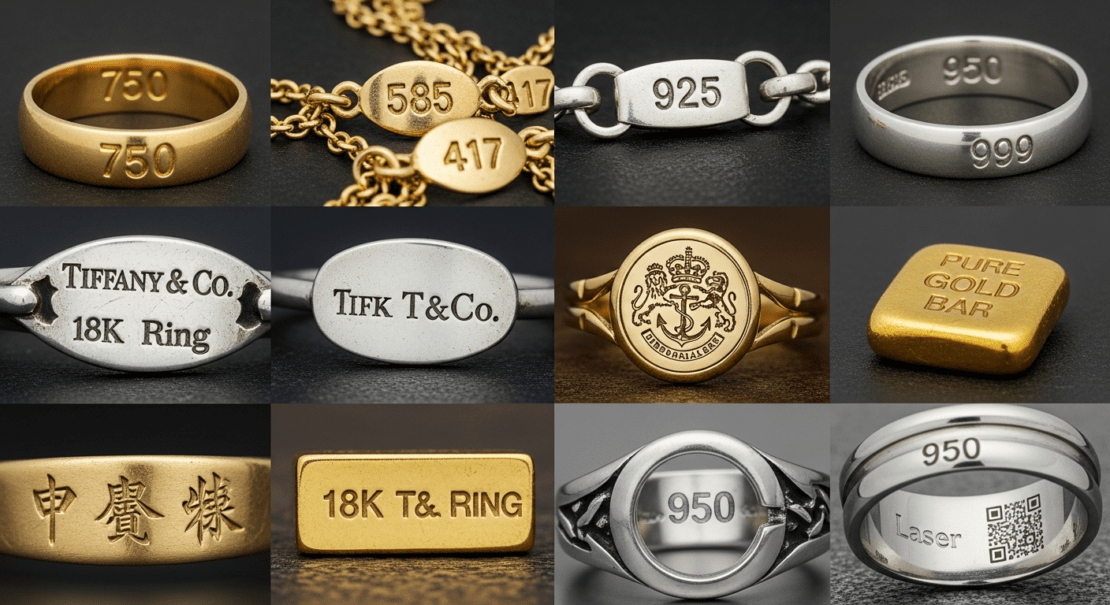
When it comes to precious metals and fine jewelry, authenticity and value are often determined by the smallest details. Those discreet stamps and symbols—sometimes overlooked—carry vital information about a piece’s metal content, origin, and legitimacy. For collectors, buyers, and even casual jewelry fans, learning to decipher these markings can reveal whether a piece is genuine or fake and can provide insights into its global journey.
What Are Jewelry Markings? (And Why Should You Care?)
Jewelry markings, also called hallmarks or stamps, are tiny but vital clues about your piece. They often indicate:
- Metal purity, for example, you might spot a small “750” inside a gold ring or “925” near the clasp of a silver chain.
- Maker or manufacturer (look for initials or symbols like “T&Co.” tucked behind a pendant)
- Country or region of origin (sometimes a hallmark reveals its home with a unique symbol, such as a lion for the UK, near the catch)
- Year or period of production (you may see a date letter engraved in a hidden spot, like inside the band)
Why they matter:
- They prove authenticity and help you avoid fakes.
- They reveal value for buyers, sellers, and collectors.
- They help trace a piece’s origin and age.
Spot Gold Hallmarks in Seconds
Gold jewelry is usually marked with three-digit numbers:
- 750 = 18-karat gold (75% pure gold)
- 585 = 14-karat gold (58.5% pure gold)
- 417 = 10-karat gold (41.7% pure gold)
Examples:
- A wedding ring stamped “750” is made of high-purity 18K gold—luxurious and valuable.
- A chain marked “585” is sturdy and affordable, perfect for daily wear.
- A ring with “417” is highly durable and budget-friendly, though paler in color.
Tip: Always look for these numbers inside rings, on clasp ends, or on pendant bails.
Silver, Platinum, and Other Markings
Silver:
- 925 = Sterling silver (92.5% silver)
- Example: A bracelet stamped “925” is bright and will tarnish over time—a sign of real silver.
Platinum:
- 950 = 95% platinum
- Example: An engagement ring marked “950” feels heavy, is naturally white, and resists tarnish.
Pure Gold:
- 999 = 24K gold (99.9% pure)
- Example: A gold bar stamped “999” is for investment, not for daily jewelry use, due to its softness.
Fake vs. Real: How to Tell the Difference
Not every mark guarantees authenticity. Here’s how to spot genuine pieces:
Verify Real Jewelry in Five Moves
- Inspect the marking: Check for clear, even stamps that are not easily scratched off.
- Weigh the piece: Compare the heft—gold and platinum feel heavier than fakes or plated items.
- Test with a magnet: Use a magnet to confirm that gold, silver, and platinum are not magnetic.
- Watch for discoloration: Spot green or black areas where fake gold plating wears off.
- Get it appraised: Have a jeweler conduct acid tests or provide expert analysis.
Warning Signs of Fakes:
- Stamps that are crooked, blurry, or missing
- Lightweight, tinny feel
- Markings that rub off easily
- A “925” ring that leaves a green mark on your finger is likely plated, not solid.
Regional Hallmark Systems: Europe, USA, Asia, and More
Hallmarking practices vary globally. Here are some key differences:
Europe:
- UK: Uses symbols (lion passant for sterling silver), assay office marks, and date letters
- Example: A British ring with a lion passant, anchor (Birmingham), and a letter “q” (year)
- France: Gold marked with an eagle’s head, silver with a Minerva head
- Italy/Switzerland: Often includes a maker’s registration number
USA:
- Gold marked as “14K,” “18K,” or with three-digit numbers (585, 750)
- Silver marked as “Sterling” or “925.”
Asia:
- India: “916” for 22K gold, “750” for 18K gold; look for the BIS Hallmark logo
- China: Numeric marks and sometimes Chinese characters
Tip: Always research the hallmarking system of the country you’re buying from.
Manufacturer’s Marks and Country of Origin
Besides purity stamps, look for:
- Maker’s marks: Unique initials or logos (e.g., “T&Co.” for Tiffany)
- Example: A ring stamped “18K T&Co.” = 18K gold by Tiffany & Co.
- Country marks: Indicate origin (e.g., eagle’s head for French gold, lion passant for British silver)
These help verify authenticity and can increase a piece’s value, especially for collectors.
Modern Trends: Laser Engraving, Micro-Stamping & Digital Tracking
- Laser engraving: Used on tiny or hidden spots (like inside rings)
- Micro-stamping: Invisible to the naked eye, it adds security.
- Digital tracking: Some fine jewelry now includes QR codes or blockchain certificates
Example: A platinum ring with a laser-engraved “950” and QR code for authentication.
Conclusion: Use Hallmarks to Your Advantage
Check for clear, crisp hallmarks. Compare markings to regional and maker standards. Confirm authenticity with at-home tests or professional verification.
- Use at-home tests and seek professional verification if unsure.
- Be cautious—if an offer seems too good to be true, it probably is
Understanding jewelry markings gives you power—protecting your investment, revealing history, and helping you appreciate the true value of every piece you own.