
Gemstone Jewelry: How to Choose, Care for, and Understand Its Value
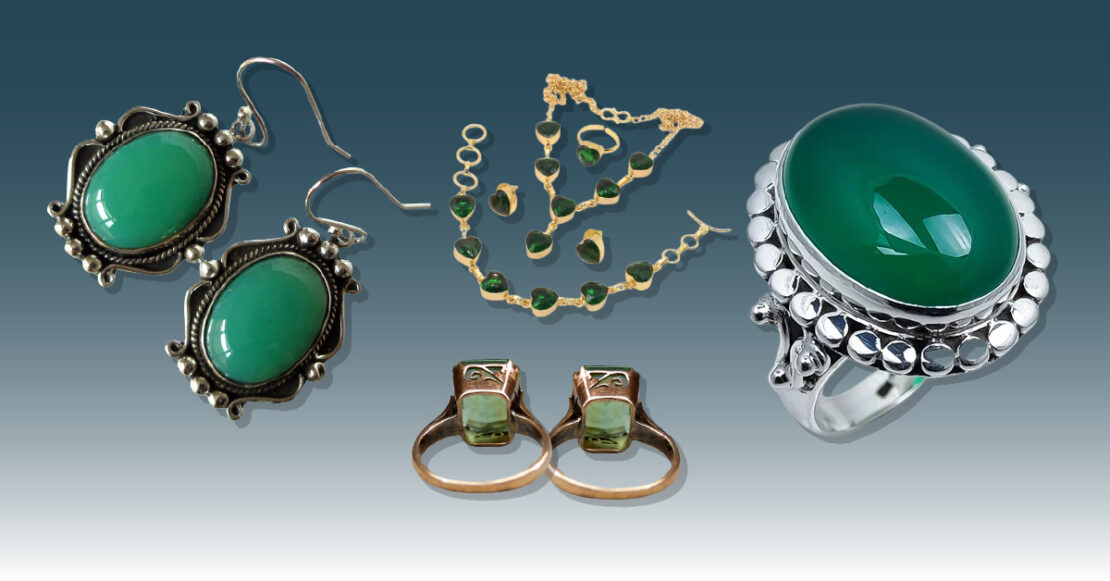
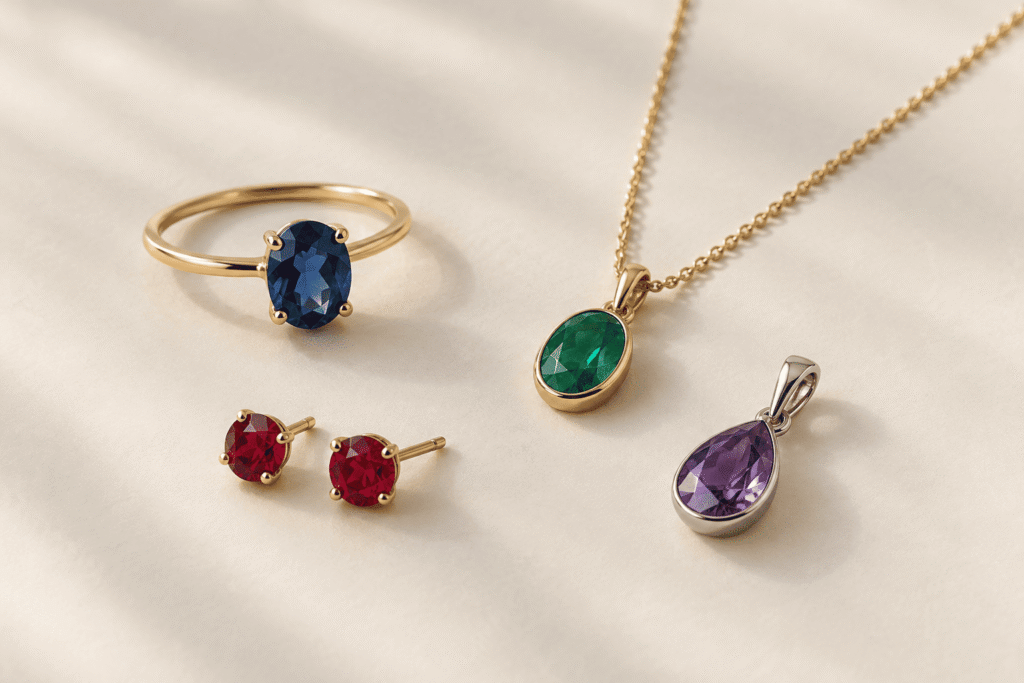
A sapphire ring, an emerald pendant, or a garnet brooch might be kept for completely different reasons: you could be drawn to the colour, admire the craftsmanship, or wish to find out how much a family heirloom would sell for.
It is useful beforehand to get a good understanding of the stone, its setting, and its condition if you are going to add gemstone jewellery to your collection or have a piece assessed. A well-known name for the gemstone or a high carat weight gives only part of the answer.
What Is Gemstone Jewelry?
Gemstone jewelry includes pieces decorated with gems, whether set in gold, silver, or platinum; strung as beads; or carved into ornaments.
Rings, necklaces, pendants, bracelets, and earrings are typical examples, and gemstones can be found in antique brooches and pins as well.
Gemstone jewellery can be classified as fine jewellery. The two terms are not opposite categories; a ruby set in a well-made gold ring is an example of jewellery that belongs to both the gemstone jewellery and the fine jewellery categories.
Popular Gemstones Used in Jewelry
Start with the colors and designs you enjoy, then consider how you will wear the piece.
| Gemstone | What to consider |
| Ruby | A red gemstone often chosen for rings and statement pieces |
| Sapphire | Available in blue and other colors; a practical option for frequent wear |
| Emerald | Valued for its green color, but needs care around impacts and some cleaning methods |
| Diamond | Highly resistant to scratching, although it can still chip |
| Amethyst and garnet | Offer colorful alternatives across a range of jewelry styles |
| Opal | Known for its play of color; requires careful handling and stone-specific care |
Ruby and sapphire are not very resistant to scratching. Although emeralds also have a relatively high hardness, they may require more careful handling. The hardness of a stone by itself doesn’t indicate how easily it can chip, fracture, or react to heat and chemicals.
What Do “Precious” and “Semi-Precious” Mean?
Diamond, ruby, sapphire, and emerald are generally referred to as precious gemstones, while many other gems are called semi-precious.
Those labels do not constitute quality ratings or reliable indicators of price. What is more important than the category printed next to a stone’s name are the stone’s individual characteristics, including its quality, rarity, and condition.
Natural, Laboratory-Grown, and Imitation Gemstones
Ask what the stone actually is before comparing prices.
- Natural gemstones form in nature.
- Laboratory-grown gemstones are made by people and share essentially the same chemical and physical characteristics as their natural counterparts.
- Imitation gemstones resemble another gem but are made from different materials. For example, glass can imitate the appearance of a colored stone.
A laboratory-produced sapphire and a glass imitation of a sapphire are thus different products, and it is necessary to clearly describe both their origin and material, since appearance alone is not sufficient to establish their identity.
How to Choose Gemstone Jewelry for Your Collection
It is possible to enjoy gemstone jewellery without having a large collection; simply choose a piece that matches your taste, your budget, and your daily routine.
Color can guide your choice, but comfort, construction, and care requirements deserve attention too. Personal symbolism or a family connection can make a piece meaningful without creating a guaranteed financial return.
Match the Stone and Setting to How You Wear It
Rings and bracelets are more likely to be knocked about than earrings and pendants, so think about whether you will wear the item every day or only on special occasions.
Make sure the setting holds the stone securely; on older jewellery examine the prongs for wear, look for loose stones, damaged clasps, and any previous repairs. If you have any concerns, get them checked before you wear the piece regularly.
Ask About Treatments and Documentation
Gemstones can be treated in order to improve their colour or clarity. Although this does not mean that the stone becomes unsuitable, the treatment may have an impact on its value and on the way it should be looked after.
Ask whether treatments are known, whether a laboratory report is available, and whether the stone needs special cleaning precautions. Heating and clarity enhancement are examples of treatments that may be identified during laboratory examination.
If you are making a purchase that is more expensive, you should ask a qualified professional if an independent report would be of use. Although it is not necessary for every item that is only modestly priced to have further laboratory tests carried out.
What Determines Gemstone Jewelry’s Value?
There is no reliable price formula that depends solely on the name of the gemstone and its weight.
For colored gemstones, important quality factors include color, clarity, size, and cutting quality. Two stones with the same carat weight can look and be worth very different amounts.
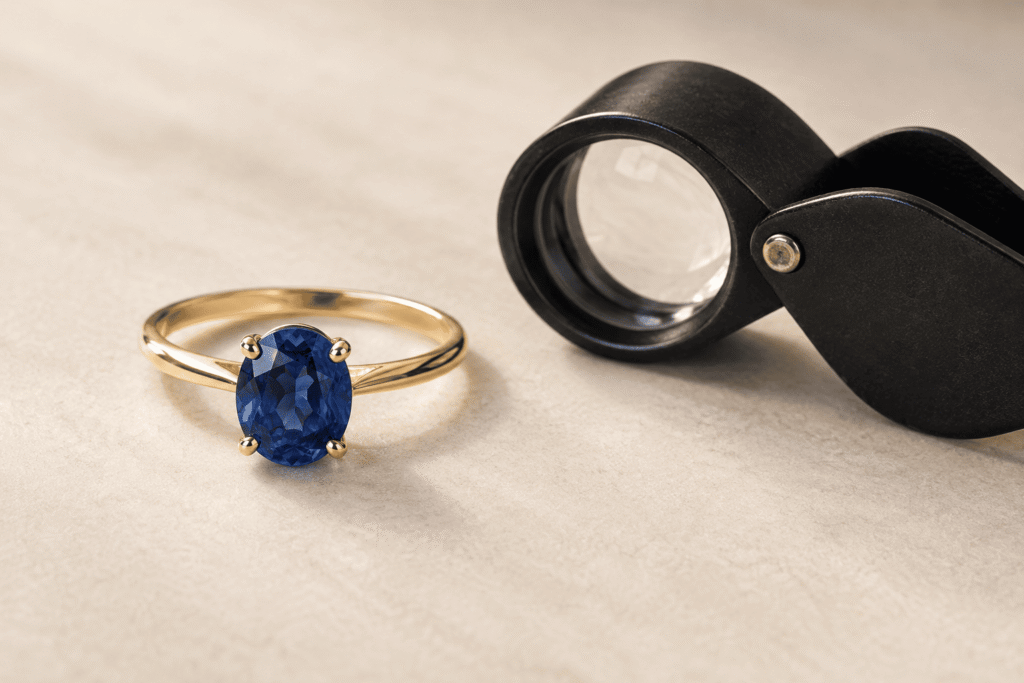
An evaluation may also consider:
- Whether the stone is natural, laboratory-grown, or an imitation.
- Known treatments and supporting reports.
- The metal’s purity and weight.
- Artistry and condition.
- The market in which the piece would be sold.
More metal does not automatically make one finished piece worth more than another. A well-made, collectible jewel may be evaluated differently from jewelry purchased mainly for its material content.
What Matters in Antique and Estate Pieces?
With older jewelry, the setting and history deserve as much attention as the stone. Maker’s marks, design, repairs, alterations, and supporting documents may help explain a piece’s significance.
Retain the receipts, past appraisals, laboratory reports, and any reliable family history, take photographs of the marks rather than rubbing them out, and get advice before making any changes to an item that you intend to sell.
Our guide to jewelry markings explains common clues found on gold, silver, and platinum jewelry.
Appraisal, Laboratory Report, or Purchase Offer?
These documents serve different purposes.
A laboratory report identifies or describes a gemstone and may disclose detectable treatments. It does not necessarily assign a monetary value.
An appraisal provides a valuation for a stated purpose and date. Ask what kind of value the report addresses and whether it meets your intended use.
A purchase offer states what a buyer is willing to pay. It should not be assumed to equal an insurance replacement valuation.
For instance, GIA issues reports on gemstones but does not assess the financial value of jewellery.
Learn more about our jewelry appraisal services and explain whether you need help with selling, identification, or a written valuation.
How To Care for Gemstone Jewelry
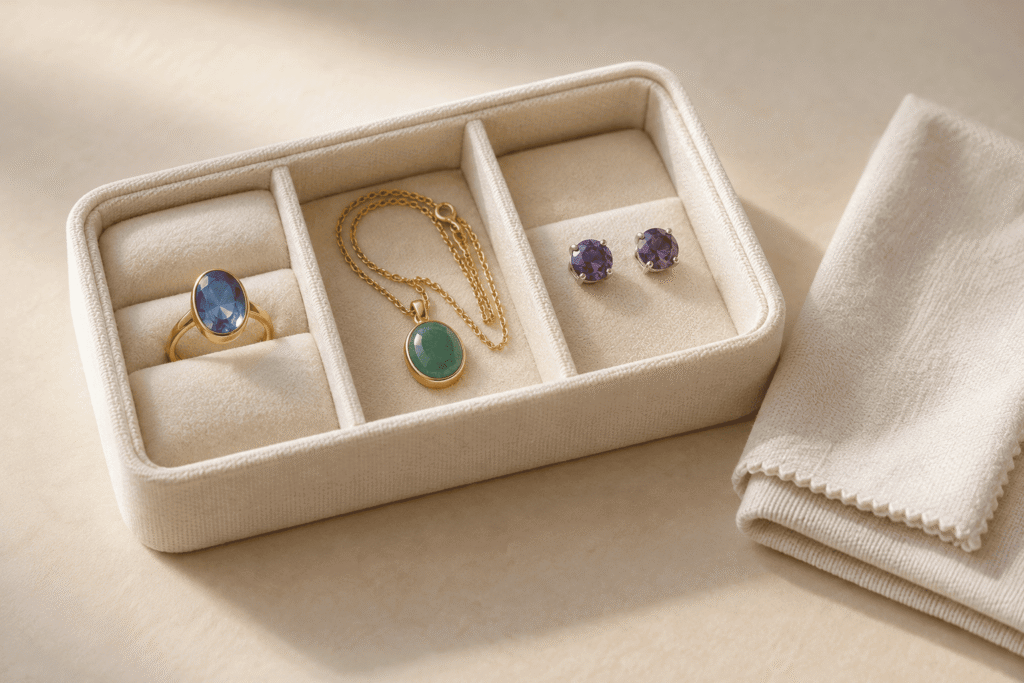
Care depends on the stone, its treatments, and the condition of its setting.
Store pieces separately so they do not rub against one another. Remove jewelry before activities that expose it to knocks or harsh chemicals.
Do not assume an ultrasonic cleaner, steam cleaner, or household solution is suitable for every gemstone. If you have inherited a piece with an unidentified stone, have it checked before deep cleaning. Treatments such as fracture filling can make particular cleaning methods unsuitable.
Frequently Asked Questions
Is it true that semi-precious gemstones are always cheap?
No. The traditional label doesn’t indicate an individual stone’s quality, rarity, or value.
Does gemstone jewelry always increase in value?
Certainly. Future value will vary depending on the item and the market situation. You should select jewellery that you personally enjoy and not regard a claim of appreciation as a guarantee.
Can a photograph confirm what gemstone I own?
A clear photograph can help start an evaluation, but it may not confirm identity, treatments, or whether it’s lab-grown. Physical examination or testing may be needed.
What should I bring to an evaluation?
Take the jewellery, the earlier appraisals, the laboratory reports, the receipts, and any other reliable information concerning the maker or the history of it.
Have a Gemstone Piece You Want Evaluated?
Whether you own an inherited ring, a vintage pendant, or a gemstone bracelet you no longer wear, understanding the piece is a useful first step.
Visit our gemstone jewelry buying guide to learn about the selling process, or contact Antique Jewelry Buyers to discuss an evaluation. Clear photographs and any existing documents will help our team advise you on the next steps.