

Art Deco Jewelry: Identification, Characteristics, Marks & Value
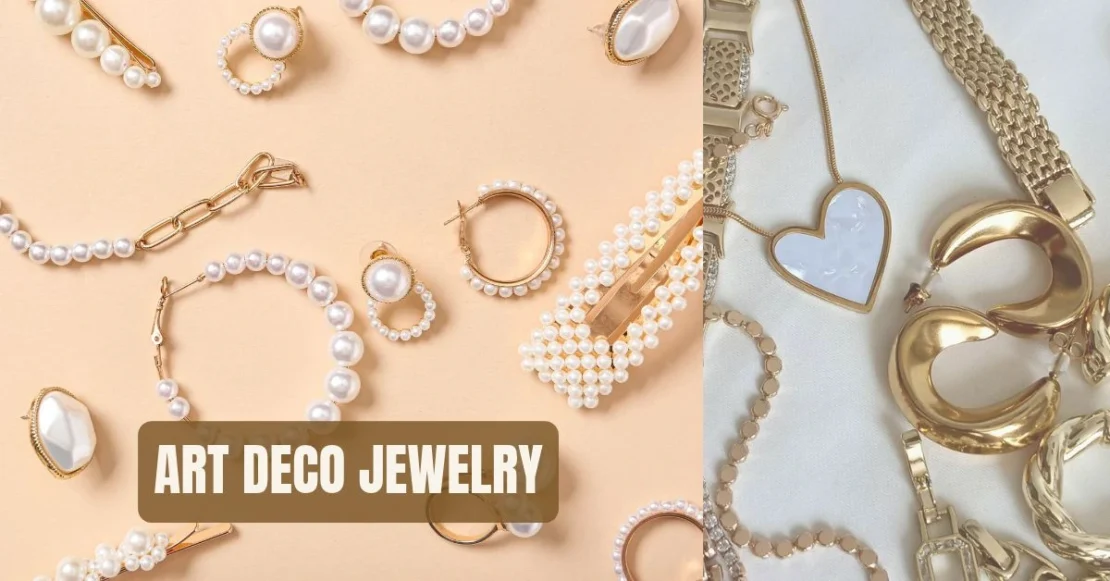
Art Deco jewelry has a real character that still appeals to vintage jewelry lovers, collectors, and antique buyers. The bold geometric designs, the elegance of the symmetry, the use of color in the gemstones and the level of detail in the work all contribute to its appeal.
If you’ve inherited an old ring, come across a vintage brooch, or are thinking of buying an antique necklace, you may be asking yourself whether it’s genuine Art Deco and what it’s worth.
However, spotting the genuine article isn’t always straightforward. Some modern reproductions are very much in the style of the 1920s and 1930s, and some older pieces have been repaired, altered, and even had stones replaced. You can easily be misled into thinking you have a piece of real value if you don’t understand the materials, hallmarks, construction, and design.
The good news is that a few key details will help you make a more informed judgment. This guide will walk you through how to identify Art Deco jewelry, its features and marks, its potential value, and when it’s worth getting it professionally appraised.
What is Art Deco jewelry?
Art Deco jewelry is jewelry that is in the Art Deco style. Art Deco was a popular style in the 1920s and 1930s, defined by modernity, luxury, architecture, fashion, and artistic expression.
Art Deco jewelry is very much the opposite of the more fluid curves of earlier Art Nouveau. It’s all about clean lines, geometric forms, strong symmetry, and bold use of color.
Popular examples would be diamond engagement rings, platinum bracelets, cocktail rings, long necklaces, brooches and decorative earrings.
Although we often think of the 1920s and 1930s when we talk about the period, the design influences predate that by a considerable margin and continued well into later decades. You can’t just look at the age of a piece to determine whether it’s period correct.
Art Deco Jewelry Characteristics: What to Look For
Understanding the key characteristics of Art Deco jewelry is one of the easiest ways to start identifying a piece.
1. Geometric Shapes and Symmetry
Geometric motifs are one of the most recognizable features of Art Deco jewelry. You’ll see lots of repetition with straight lines, triangles, rectangles, circles, and stepped forms.
Many rings and brooches have balanced designs, while bracelets and necklaces often show repeated geometric patterns.
2. Bold Gemstone Combinations
Art Deco designers frequently combined contrasting colors to achieve a dramatic effect.
Common materials and gemstones include:
- Diamonds and sapphires
- Rubies and emeralds
- Onyx and jade
- Coral and turquoise
- Rock crystal and coloured glass
- Enamel and other decorative materials
Black-and-white combinations (particularly diamonds with onyx) are a prime example.
3. Platinum and White Gold Settings
Platinum was the metal of choice for fine Art Deco jewelry as it was strong enough to allow for the very intricate settings and the delicate look that was so much a part of the style.
White gold was also used, along with yellow gold and several other metals. A white metal setting on its own, though, doesn’t necessarily indicate that it’s an Art Deco piece.
4. Intricate Craftsmanship
Check the stone settings, metalwork, and finishing. Quality Art Deco pieces often feature milgrain, filigree, pierced metalwork, and carefully set stones.
These details can help indicate the manufacture and likely age of the piece.
How To Identify Art Deco Jewelry
If you’re looking to spot Art Deco jewelry, look at the whole piece rather than just one decorative element.
Examine the Overall Design
Look for the geometric patterns, symmetry, stepped details, and contrasting colors. Compare it with the known examples from the 1920s and 1930s.
A piece may be inspired by Art Deco without actually being from that era.
Check the Materials and Gemstones
Look at the gemstones, the metal and the settings. A jeweler can tell you whether the stones are natural, synthetic, or imitation.
Remember that synthetic gemstones were around in the Art Deco period, so the presence of a synthetic stone doesn’t necessarily mean the piece is modern.
Inspect the Construction
Look at how the stones are set, how the metal is finished, and whether the design appears to have been altered later.
Look out for replacement stones, modern repairs, soldering, and mismatched bits, as these can all affect both identification and value.
Look for Maker’s Marks and Hallmarks
Turn the piece over and check the inside of rings, bracelet clasps, necklace clasps, and the backs of brooches.
A magnifying glass or jeweler’s loupe will help you to look at the small inscriptions.
Authentic Art Deco Jewelry Marks and Hallmarks
Authentic Art Deco jewelry can be a real source of information as to who made it, what it’s made of, and where it came from.
However, hallmarks aren’t always there, and their absence doesn’t necessarily mean it’s a fake.
Common Marks to Look For
Depending on the country and manufacturer, you may find:
- Maker’s marks: Establish the jewelry company or individual maker.
- Metal purity marks: indicate the precious metal content.
- Platinum marks: may include PLAT or PT950.
- Gold purity marks: may be 14K, 18K or a numerical fineness mark.
- Assay marks: the authorities responsible for official testing/hallmarking in certain countries.
Some jewelry will also have patent numbers, workshop marks or other identifying inscriptions.
Do Hallmarks prove a piece is genuine?
Not in the least. A hallmark can tell you something about the metal content or, indeed, the manufacturer, but it doesn’t prove that a piece is genuine Art Deco.
Marks can be worn, can be altered, can be copied onto later pieces, and can be added to later pieces. The design, construction, materials, and historical context all need to be considered together.
How to Date Art Deco Jewelry?
Dating vintage Art Deco jewelry requires looking at several factors, not just one.
Start with the design. Geometric patterns, symmetry, platinum settings, and unusual gemstone combinations could all point to an Art Deco influence.
Next, look at any maker’s marks, hallmarks, patent numbers, or inscriptions. These can sometimes be cross-referenced with manufacturer’s records and reference books.
Construction methods can also be a clue. A good jeweler will be able to spot period techniques and identify any later alterations.
If it has a proven ownership history, original receipts, photos, or an earlier appraisal, keep those. They might be useful in establishing the history of the piece.
Art Deco jewelry value: how much is it worth?
Collectors and owners often ask, ‘How much is Art Deco jewellery worth?’
The answer depends on the individual item. Some have very little resale value; others are of considerable interest to collectors, particularly rare designs from well-known makers.
There’s no one price for all Art Deco jewelry.
Factors That Affect Antique Art Deco Jewelry Value
1. Maker and Brand
Jewelry from established designers and well-known manufacturers will, of course, be more interesting to collectors, especially if the manufacturer can be verified.
2. Precious Metals
Platinum, gold, and other precious metals increase the material value. Purity, weight, and current metal prices also affect the total value.
3. Gemstones
Natural diamonds and high-quality coloured gemstones can add significant value to a jewelry piece. Quality, size, condition, and authenticity all matter.
4. Rarity and Design
Unusual designs, limited-production items, and the odd bit of kit will often be more desirable to the collector than the standard design.
5. Condition and Originality
Original components, a good original setting, and minimal alteration will go a long way toward maintaining collector appeal. Missing stones, a damaged clasp, and extensive repair work will all negatively affect value.
6. Market Demand
Collector interest varies over time, and actual sales of comparable items are a better indicator of value than asking prices.
Art Deco jewelry appraisal: when should you get one?
If you think your jewelry may be valuable, an Art Deco jewelry appraisal can help you establish what you actually have.
A proper appraiser or qualified antique jewelry specialist can examine the metal, stones, construction, maker’s marks, condition, and design.
An appraisal may be particularly useful if:
- You’ve inherited an old jewelry collection.
- The piece has a very distinct maker’s mark.
- It contains valuable diamonds or coloured gemstones.
- You’re looking at selling it.
- You need the documentation for insurance purposes.
- You suspect the jewelry may be rare or historically significant.
Remember that an insurance replacement valuation and a resale valuation are not the same thing. If you intend to sell, you’ll want an opinion that reflects the relevant resale market.
Frequently Asked Questions About Art Deco Jewelry
Is all vintage geometric jewelry Art Deco?
No. Geometric designs appear in many periods and styles. You need to consider the overall design, materials, construction, and approximate date before deciding if it’s Art Deco.
How do I know if my Art Deco jewelry is genuine?
Look at the design, the stones, the metalwork, the construction and the hallmarks. For a more definitive assessment, I’d recommend having it looked at by a specialist in antique and vintage jewelry.
Is Art Deco jewelry valuable?
It can be. Value depends on the maker, the materials, the gemstones, the rarity, the condition, the originality, and the current state of collector demand. Some pieces are obviously far more collectible than others and will have a far higher resale value.
Are Art Deco hallmarks always present?
No. Some of the pieces have very obvious maker’s marks and metal stamps; others have none at all. The absence of a hallmark doesn’t in itself mean the piece is fake.
Should I restore the Art Deco jewelry before I sell it?
Not necessarily. Replacing the original stones, stripping away historical detail, or changing the setting could all affect collector interest. Get the piece assessed before you go any further with any major repairs or alterations.
Conclusion
Art Deco jewelry is all about geometric designs, the use of big, bright stones, fine metalwork, and the whole shebang, and it’s very much associated with a period in design. That said, it’s not always easy to tell if a piece is genuine and what its value is.
By looking at its characteristics, materials, construction, maker’s marks and hallmarks, you can start to get an idea of its age and potential significance. Comparing it with other similar pieces that have sold, along with a professional Art Deco jewelry appraisal, will help establish its value.
Whether you’re researching an inherited ring, evaluating a vintage bracelet, or considering selling an antique brooch, take time to identify the piece properly before deciding. A little research can help you protect its original features, avoid unrealistic price expectations, and find the right market if you decide to sell.
For more details, visit our website: https://antiquejewelrybuyers.org/